People and the Deer in Close Proximity

The rutting deer I posted about previously were in amongst the large herds of deer in Bushy Park. The park gives guidance on keeping out of the way of the deer and specifically keeping dogs on leads. However, that didn’t seem to have any impact. People seemed to be close to the deer on a regular basis. Even dogs were running free. Strangely, none of this seemed to cause any trouble. Perhaps the dogs and the deer are just used to each other.

At the time I was more focused on getting photos of the deer and not having people interrupting the shots. Afterwards, I wished I had taken more photos to show how the two groups were interacting (sort of) in such a regular way. These shots hopefully give some impression of how close they were to each other. I am not getting that close to a stag, however relaxed it might seem!

Reworking an Old Shot with Modern Denoise

Periodically, when thinking about the latest processing tools that I have available, it takes me back to some older shots that would be interesting to rework. This shot of one of the Blue Angels jets was taken at NAS Oceana during one of their air shows. I was shooting with the 1D Mk IIN and at ISO 800. At the time, this was a really high ISO and resulted in a lot of noise in the images. (As an aside, I did find that printing did not show the noise at anything like the level that was apparent on screen.) Even without the denoise function, the latest raw convertor makes a decent job of the file but I figured I would use the denoise too. I think the file comes out really cleanly as a result. It also helps that, as an 8MP file, the processing is a lot quicker!

Bittersweet Day as FWLE Opens

December 6th, 2025, was the day that the Federal Way Link Extension opened as part of Sound Transit’s light rail system in the Puget Sound region. When I moved back to the UK at the beginning of the year, I had thought I would be able to get back for the opening events which I had anticipated would be in early 2026 after another extension opened. As it happened, they were able to open ahead of that other section, and a December date was chosen. The timing of this – along with some other concerns – meant I wasn’t able to go back.

I first got involved with the project in 2017. I had just joined SNC-Lavalin, which was to become AtkinsRéalis, and we started discussions with Mott MacDonald about partnering for the project management role. The rest of that year was spent on preparing the proposal and then the interviews and the result was our selection. Things kicked off in 2018, and we had some immediate ups and downs. However, we got on track pretty quickly and built a strong team between the two partners and our associated sub consultants.

I was not involved in the day-to-day activities of the project, and our team deserve all of the credit. I was on the board of the joint venture, but I did get to spend a lot of time down with the project team and I made sure to regularly get out on site and see what was happening so I could be up to date with the progress as well as the issues that were being experienced. Aside from that, I found it very interesting to see the construction process underway as I was learning a lot myself.

The early stages of the project do not make it apparent how much is happening. Clearing out the land that will be used and prepping for construction is so important but not very glamourous. Then the large structures started to come together. The construction was phased with the northern sections happening before the southern. We re-routed a state route to build the section just south of the airport and then built a whole new road bridge which is now part of the SR509 project that WSDOT is building.

Stations were built at three locations. These were large structures but also included significant parking garages which came with very different but no less difficult issues to solve. The agency makes a big deal on the architecture side of the stations, and they were all to a style but with individual finishes and artwork to reflect the region. Heading up the tower crane at one of the stations gave me a chance to see the wider location from a perspective that few get to experience.

The largest part of the cost of building a light rail system like this is the civil works. Moving large amounts of earth and building concrete structures requires a lot of people and plenty of time. However, the most complex part of the process is installing and commissioning the systems. This includes the track, the power and the signalling elements. Once the civil works are complete, to the passers-by it might look like things are done. However, there is much still to be achieved. Getting the track laid and properly aligned is a major effort. I found the complex track-work to be a fascinating thing to see. Powering up the system was also a big deal, but the overhead wires are dependent on the track location so can’t be done until the track is complete.

The latter stages include getting trains down the track to check for clearances before they can be powered up and operate under their own steam. That was being done at the time I left the country. I didn’t get to see the full tests of trains on the track. That all happened through 2025 and then it was in to trial running to demonstrate not only the capability of the various systems but also the ability to meet the required running times and the integration into the existing operations on the network. I was sorry to miss all of that.

This addition to the system will provide better connectivity to the southern part of the region and the launching point for the next extension which will go down to Tacoma. If you are stuck on I-5 heading northbound early in the morning and you see the train zipping by, maybe you will consider an alternative way to head into Seattle? If you do, I hope you get the train with the livery our project team paid to have added.

Metrea’s Appearance

When I was still in Seattle, we would get periodic appearances from Metrea and their KC-135s. They would provide tanker support to the US Navy. That they operated from Boeing Field rather than going to a Navy base was always welcome. I didn’t know much about Metrea other than that they provided tanking services. However, they showed up at RIAT with a couple of their other types.

They brought a pair of turboprops. The King Air was in a low-key grey paint scheme and didn’t have many conspicuous external additions. There were some antennae that suggested extra comms capabilities and some ventral fins that imply something else might get added that reduces directional stability.

The Dash 8 had a bit more of a colourful paint job. A grey base livery but some red and yellow stripes brightened things up a bit. It similarly didn’t have anything too conspicuous added while it was flying but, when it was on static display, there was a turret under the front fuselage. There was another Dash 8 which did have some sensors which will get a post at some point.

Lighting the Christmas Train

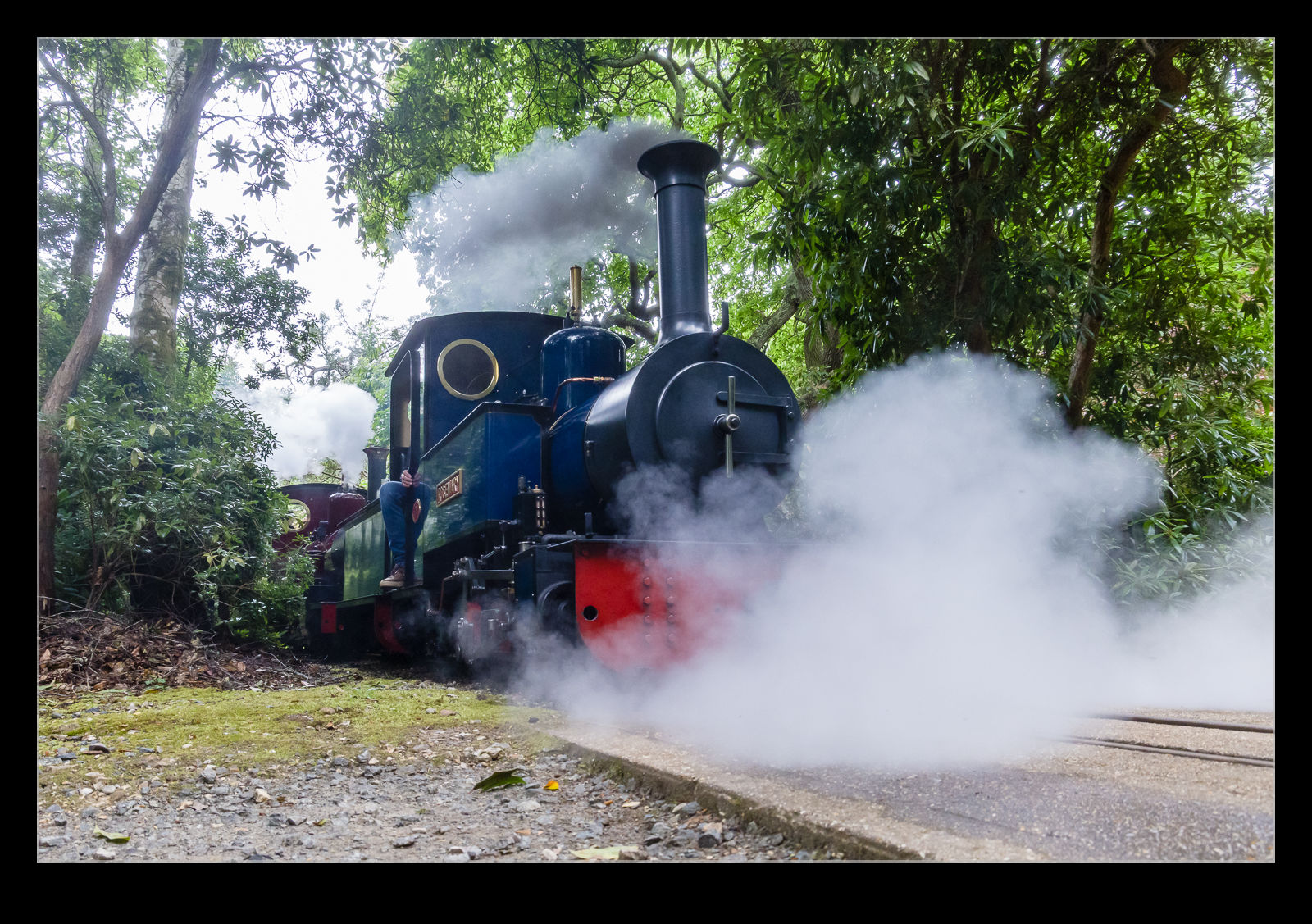
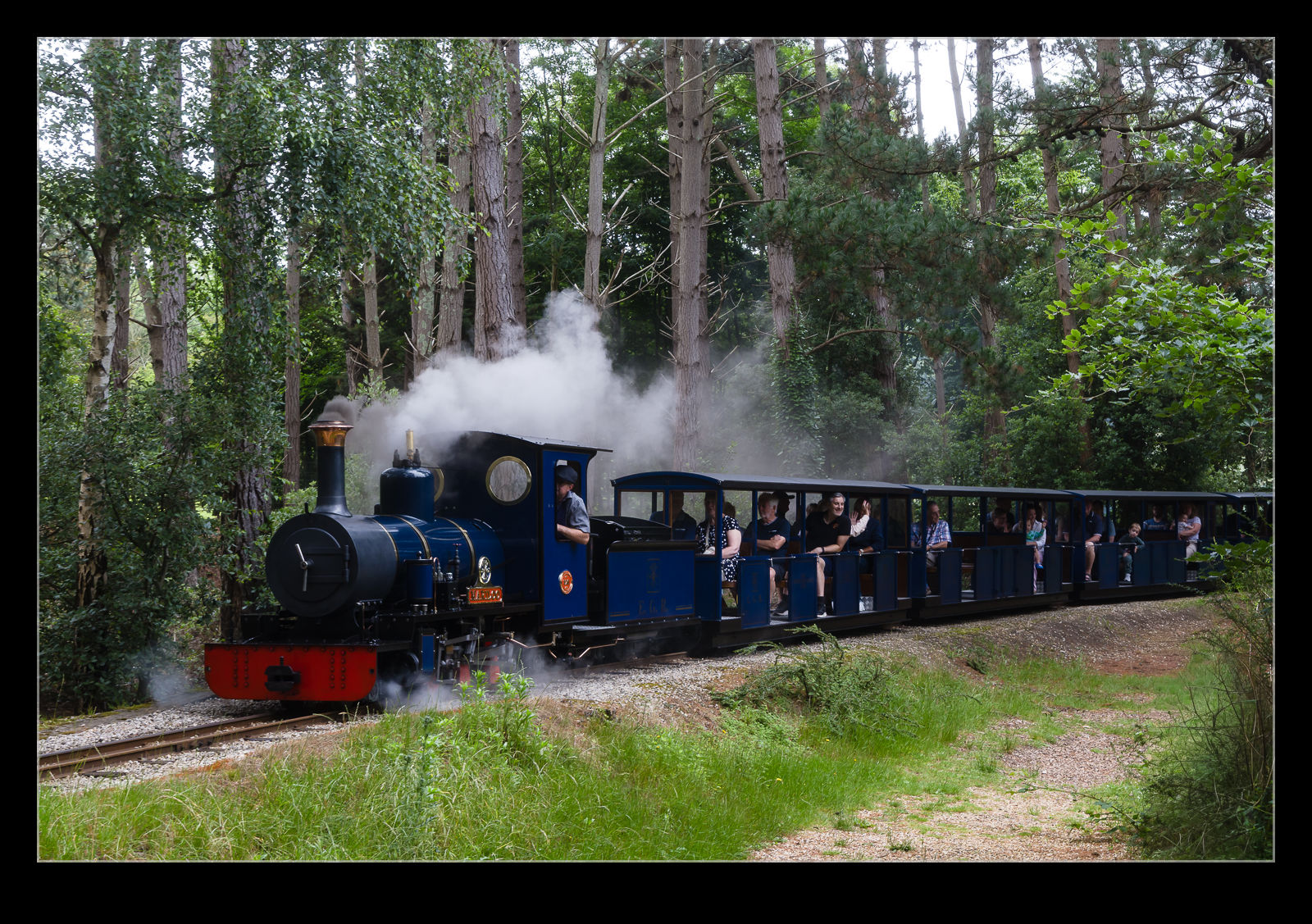
Get to the run up to Christmas and, if you have a heritage railway near you, there is a good chance they will be advertising that they have illuminated trains in operation. The trains will have lights all across the outside and probably within the carriages too. I’m sure they are fun to ride on but, from my point of view, seeing the outside lights is more appealing than being inside.

The Watercress Line is close to Winchester, and they had an illuminated service. In fact, they had more than one. My mum was visiting, and she was also interested in the lights so, late in the afternoon, since it was already getting dark at that time, we popped out to see the train go by. Sure enough, we soon saw it coming up the hill out of Alresford. There is a long stretch where the trees have been trimmed back when you get a good view of it coming our way. Even with the lights, the exposure is still a stretch for the camera. It did okay, though, and a bit of noise reduction software helps.

As they came around the corner into the straight heading at us, the lights would illuminate the embankment on either side of the cutting. There was also a strong yellow glow which, I assume, came from the firebox. The colours were constantly changing and it looked really impressive as the loco pulled hard up the bank. I think that they had swapped to a smaller loco because they had a diesel on the back of the train to support.

We were going to head straight home but one of the other people there told us there was a second train coming down from Alton a little while later. While it was getting a bit chilly and definitely dark, we figured there was no harm in hanging around. We did get the second train as it came down the cutting and then headed back the way the previous train had come. Going that way, they are going downhill so the loco is barely working to get them home. No plumes of smoke and thundering noise.

Well, They Didn’t Survive

I wasn’t terribly shocked when I recently heard that New Pacific ceased trading. The model seemed a bit suspect when it was first announced and they rapidly transitioned to charter work and away from schedule flying. I still liked seeing their 757s when they showed up in Seattle but I never thought they would survive long. Sadly, that proved to be the case. Here are some other shots of their operations which we won’t see again.

Parakeets Are Noisy Little Sods

It used to be that I thought parakeets were to be found in a park in London. They seem to have been quite effective at surviving and thriving in the UK and now they seem to crop up all over the place. I have seen them out near Heathrow and in Bushy Park. Richmond Park has had them for a long time, I think. They do provide a flash of colour in the south of England, but they are not a quiet bird. Their call is piercing, and they seem to be calling all of the time.

They are also fast fliers and getting shots of them while airborne has been a struggle for me. Since they are quite small, you need a long lens to get a decent image and picking them up with a long lens and then tracking – often against a busy backdrop – is very challenging. When they are in the trees I have had more success. Here are some shots that I have got of them in recent months. I will hopefully do a better job of catching them in flight before too long.

Bizjets At RIAT

The number of operators attending RIAT attracts a lot of corporate attention. Consequently, there are a few bizjets that show up at Fairford too. Most of these are civilian operated but I may have been a little lax and included a military operated bizjet just because I can. Here is a selection of the corporate types that showed up during the several days of RIAT.

Lovely Autumnal Colours at Stourhead

We took another visit to Stourhead in the autumn of 2025. It wasn’t just because we were looking for nice foliage colours but that wasn’t a bad side benefit. It also meant plenty of other people were there at the same time. The colours in some of the trees were really lovely. It helped that some trees were still green while others had become yellow and brown.

Walking around the lake gave nice views of the different trees. Additionally, we went up the hill to the folly which provided a nicer high angle view of the lake and the colours within it including trees growing on islands. Stourhead is such a lovely place. It is worth the National Trust membership fee on its own.

RAF’s First Wedgetail

The provision of airborne early warning seems to be a topic that is vexing countries currently. The RAF retired its E-3 fleet without a replacement. They then ordered five Wedgetails only to later reduce the order to three. Now there is discussion of increasing it again. Meanwhile the US decided to similarly replace the E-3 fleet with Wedgetails and ordered two.

A change of administration brought a plan to scrap that idea, use satellite surveillance and buy some more Hawkeyes in the interim. Congress is pushing back on that. Meanwhile, NATO had planned to go down the Wedgetail route but is now looking elsewhere given the lack of commitment from the US to the platform. SAAB’s GlobalEye has since picked up more orders including one from France and NATO might follow that route. All a bit of a mess.

Anyway, all of that is a long prelude to the fact that the first of the RAF’s Wedgetail fleet made an appearance at RIAT in 2025. It was supposed to appear on one day but apparently scrubbed. Consequently, it was rearranged to come in the following day. I imagine the RAF didn’t want the embarrassment of it failing to appear. It made a run in with the Red Arrows providing formation support. Then it made solo passes and an approach for a touch and go.

I don’t know how far off service entry it is, but testing continues at Boscombe Down. I have seen its distinctive outline on the airfield when driving along the A303. Hopefully they will be active before too long and also that, this time, the funding is provided to keep the systems current unlike the issues that led to the E-3 fleet fading away.